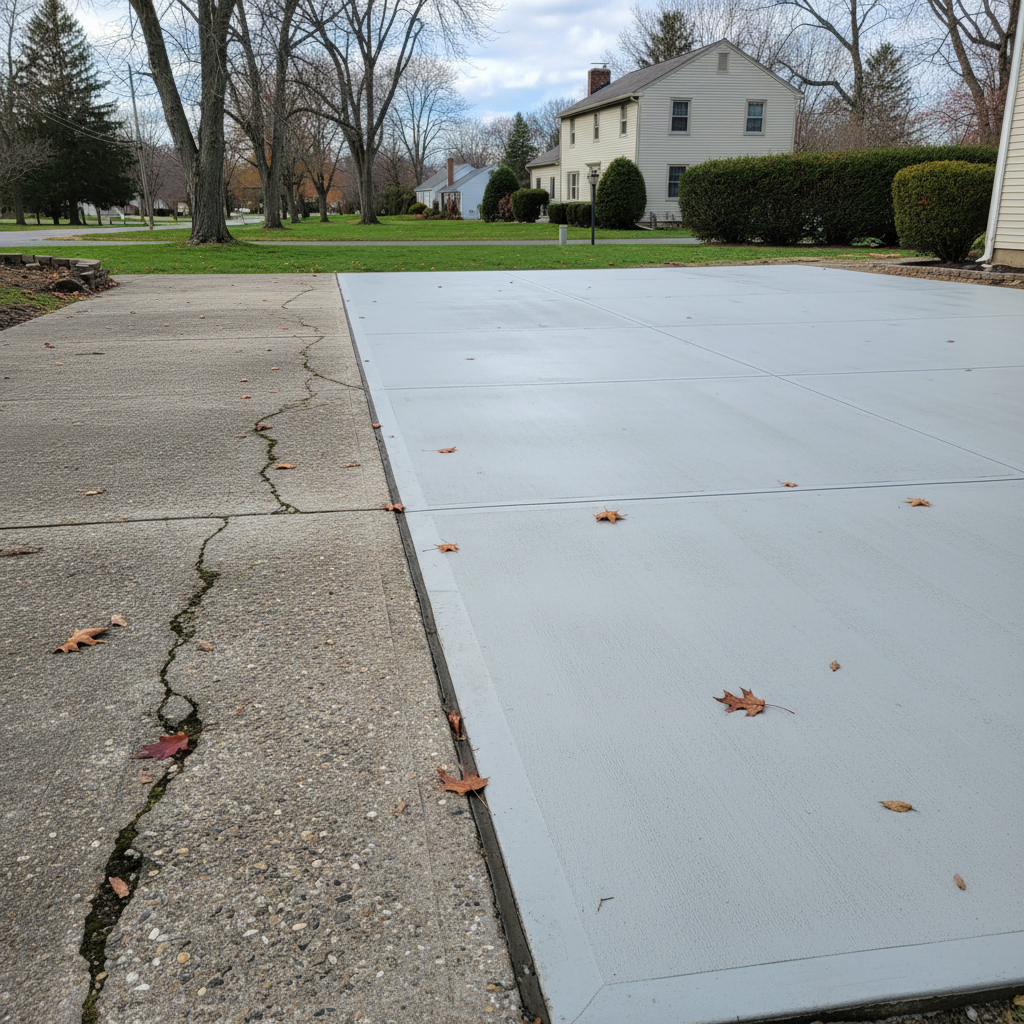
Alright, so you're thinking about adding some new flatwork around your Manchester home – maybe a patio, a walkway, or even a driveway. You've got choices, and honestly, it can get pretty confusing with all the different materials out there. Today, I want to chat about two main ways to go when you're sticking with concrete products: a traditional poured concrete slab versus using precast concrete pavers. Both definitely have their place, but they're absolutely not the same thing.
The Standard Poured Concrete Slab: Tried and True
When I say 'poured concrete,' I'm talking about what most folks picture: a crew shows up, builds forms around the area, and pours wet concrete right onto a prepped base. We then finish it, let it cure, and boom – you've got a solid, single surface. It's been the go-to for ages, and for good reason.
Cost
Generally speaking, a standard poured concrete slab will be your more budget-friendly option right out of the gate. The material cost per square foot is usually less than pavers. And while there's labor involved in forming, pouring, and finishing, it's often quicker than laying individual units. If you're trying to cover a lot of ground without spending a fortune, this is probably the direction you'll lean.
Durability and Maintenance
A well-installed concrete slab is tough, no doubt about it. It can handle heavy stuff – think cars on a driveway – and it's pretty low maintenance. You'll want to seal it every few years, mostly to protect against our Connecticut freeze-thaw cycles and to stop staining. The biggest worry with poured concrete is cracking. Even with proper control joints, temperature swings and ground movement, especially with our clay-heavy soils in places like the North End, can cause cracks. Fixing these usually means patching, which can stick out a bit, or in bad cases, replacing a whole section. But for everyday wear and tear, it holds up great.
Appearance
You can actually do a lot with poured concrete these days. You can get different finishes – a broom finish for traction, a smooth trowel, or even exposed aggregate for a more decorative vibe. It's a clean, continuous surface. However, it’s just one color and texture unless you add integral color or stamp it, which, of course, adds to the cost and complexity. It tends to look more utilitarian unless you really go custom.
Precast Concrete Pavers: Modular and Versatile
Now, let's talk about pavers. These are individual concrete pieces, made in a factory, that get laid over a prepared base of compacted gravel and sand. They interlock, either because of their shape or the sand in the joints, to create a flexible surface.
Cost
This is where pavers typically get pricier than a standard pour. The pavers themselves cost more per square foot than ready-mix concrete. Then, the labor involved in precisely prepping the base and laying each paver by hand is more intensive and takes longer. You're paying for the craftsmanship and that modular design, you know? Expect to pay more upfront for a paver installation.
Durability and Maintenance
Here's where pavers really shine, especially in our climate. Since they're individual units, they can flex and move a little with the ground. This means they're much less likely to crack than a solid slab. If one paver gets damaged, you can usually just pop it out and replace that single piece, which is a huge bonus for repairs. Maintenance involves keeping the joints filled with sand (polymeric sand works best to keep weeds away) and a good cleaning now and then. They're incredibly durable and can handle heavy traffic just like poured concrete, sometimes even better because of their flexibility.
Appearance
Pavers offer a massive range of aesthetic options. You can find them in countless shapes, sizes, colors, and textures. You can create intricate patterns, borders, and designs that just aren't possible with a single poured slab. From a rustic cobblestone look to modern, sleek lines, pavers give you so much design freedom to match your home's style. They often have a more 'finished' or 'upscale' appearance right from the start.
My Take for Manchester Homeowners
So, which one should you pick? It really comes down to what matters most to you.
- If budget is your absolute top concern and you need a functional, durable surface for a driveway or a basic patio, a well-installed standard poured concrete slab from a company like Coastal Concrete is a solid choice. Just make sure your contractor really understands proper base preparation and control joint placement for our local conditions.
- If you're looking for maximum aesthetic appeal, design flexibility, and long-term repairability, and you're okay with investing a bit more upfront, then concrete pavers are probably going to make you happier in the long run. The ability to replace individual units if something goes wrong, without ripping up a whole section, is a big plus for homeowners here in Manchester.
Both are great products when installed correctly. It's about figuring out what you need for your specific project. Give us a call at Coastal Concrete, and we can walk you through all the options for your yard.