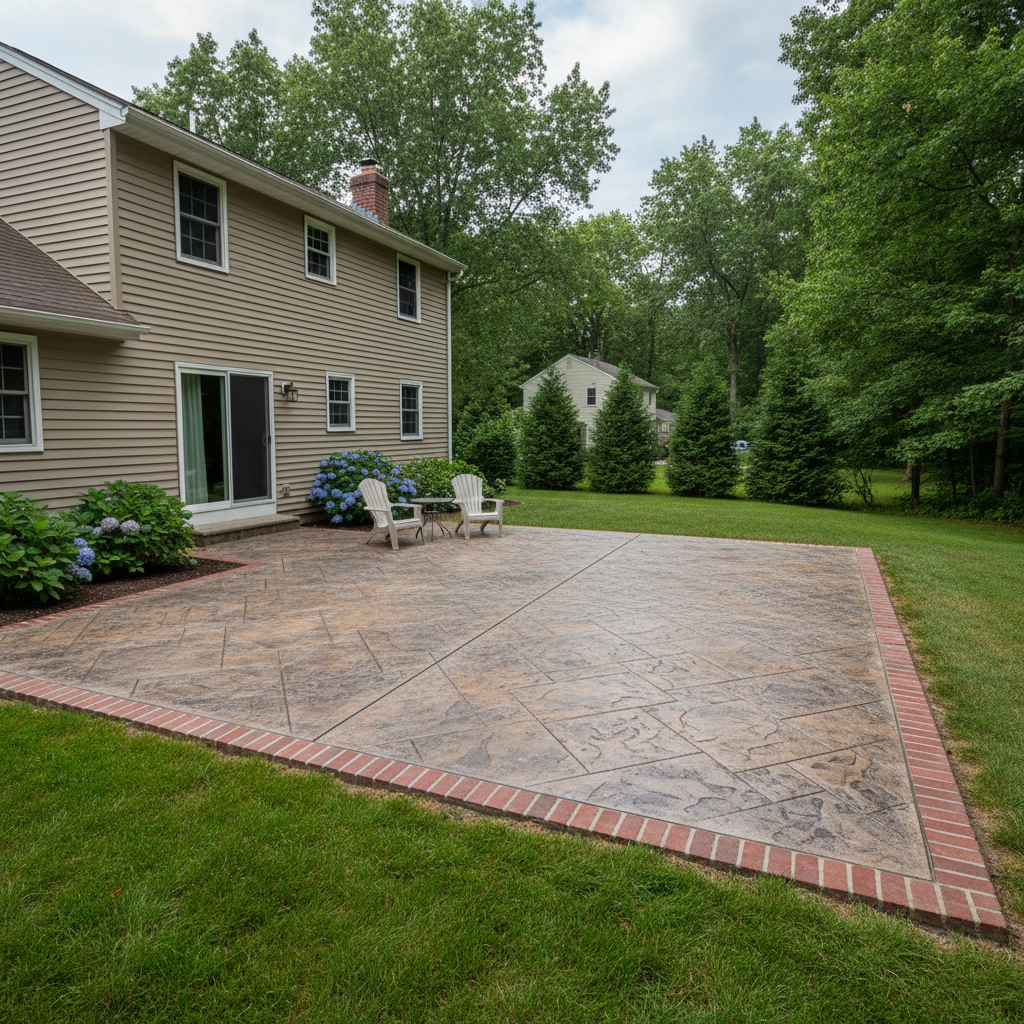
You want a new concrete patio. Great idea! It's a fantastic way to boost your outdoor living space, whether you're planning summer BBQs or just a quiet spot for your morning coffee. But here in Manchester, I've seen my fair share of patio projects go sideways, mostly because folks don't know what to watch out for. As a contractor, I'm here to tell you what I've seen, what to avoid, and how to make sure your new patio is something you'll love for years, not regret.
Mistake #1: Not Planning for Drainage (Seriously, It's Huge Here)
This is probably the biggest one, especially with our New England weather. We get plenty of rain, and if your patio isn't designed with proper drainage, you're asking for trouble. I'm talking about water pooling against your foundation, eroding your landscaping, or even seeping into your basement. It's not just about sloping the patio away from the house, though that's step one.
You need to consider the grade of your yard, where the water will go, and if you need catch basins or French drains. I've seen beautiful patios in areas like the North End of Manchester where folks didn't think about it, and suddenly they've got a swamp next to their house every spring. A good contractor will talk to you about this upfront. If they don't, that's a red flag.
Mistake #2: Choosing the Lowest Bid Without Understanding Why
Look, I get it. Money matters. Everyone wants a good deal. But when it comes to concrete, the cheapest bid often ends up being the most expensive in the long run. Why? Because cutting corners on concrete means sacrificing quality. They might use a lower-grade mix, skimp on the rebar or wire mesh, or rush the prep work.
I've seen contractors pour concrete directly over unprepared soil, or use too much water in the mix to make it easier to work with. Both are recipes for cracks, crumbling, and a patio that won't last. Ask questions. What kind of concrete mix do they use? How do they prepare the sub-base? What kind of reinforcement? A reputable company, like Coastal Concrete, will be transparent about their process and materials. If a price seems too good to be true, it probably is.
Mistake #3: Ignoring the Importance of a Proper Sub-Base
Your patio is only as good as what's underneath it. I can't stress this enough. A solid sub-base is crucial for preventing settling, cracking, and heaving, especially with our freeze-thaw cycles here in Connecticut. If a contractor just scrapes off the topsoil and pours, you're going to have problems.
A proper sub-base involves excavating to the right depth, laying down and compacting several inches of gravel or crushed stone, and then compacting it again. This provides a stable, well-draining foundation. It takes time and effort, but it's non-negotiable for a durable patio. If your contractor isn't talking about compaction and proper base material, you should be wary.
Mistake #4: Not Getting Everything in Writing (And Being Specific)
This sounds like common sense, but you'd be surprised how many people rely on verbal agreements. Get a detailed contract. It should outline everything: the scope of work, materials used (type of concrete, reinforcement, finish), start and end dates, payment schedule, and warranty information. Don't assume anything.
For example, if you want a specific stamp pattern or a colored concrete, make sure it's explicitly stated. If you've discussed drainage solutions, ensure they're included. This protects both you and the contractor and prevents misunderstandings down the road. If a contractor pushes back on a detailed contract, that's a huge red flag.
Mistake #5: Forgetting About Permits and Local Regulations
Depending on the size and location of your patio, you might need a permit from the Town of Manchester. Some homeowners try to skip this to save a few bucks or avoid the hassle. Big mistake. Building without a permit can lead to fines, having to tear out work, or issues when you try to sell your home.
A good contractor will know the local codes and handle the permit process for you, or at least guide you through it. Don't let anyone tell you it's not necessary if it clearly is. It's about ensuring your project meets safety and structural standards, and it protects your investment.
Building a new concrete patio should be an exciting project, not a source of stress. By avoiding these common mistakes, you'll be well on your way to a beautiful, long-lasting outdoor space that you'll enjoy for years to come. Do your homework, ask the right questions, and don't be afraid to walk away if something doesn't feel right. Your future self will thank you.