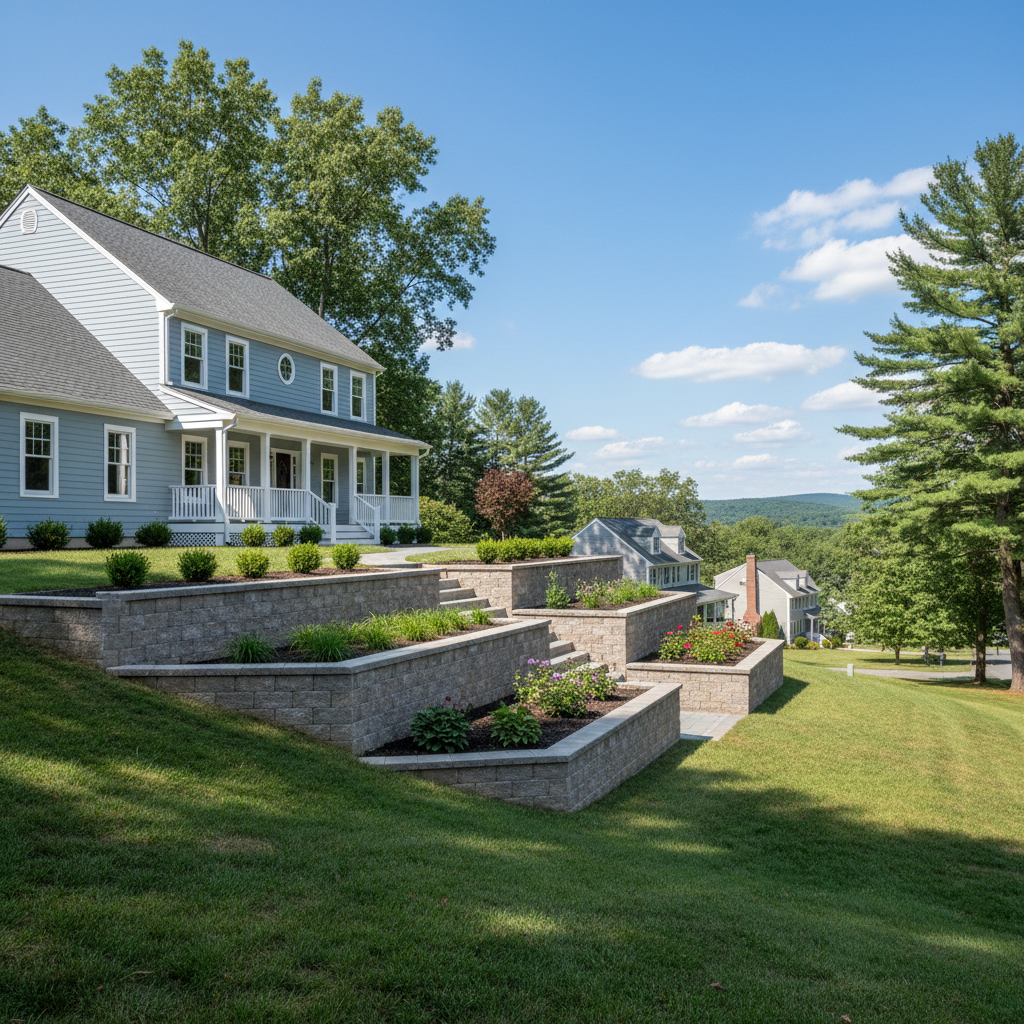
You've got a slope in your yard, maybe it's eroding, or you just want to create some usable, flat space. What's the first thing that comes to mind? Probably a retaining wall. And if you're in Manchester, CT, you've seen plenty of them. From the older homes in the North End with their terraced gardens to the newer developments off Buckland Hills, retaining walls are everywhere. But here's the thing: a good retaining wall isn't just about stacking some blocks or pouring some concrete. It's a whole lot more, especially around here.
Why Manchester's Slopes Demand Solid Walls
We've got some interesting topography in Manchester. You'll find everything from gentle inclines to pretty steep grades, especially as you get closer to the Bolton line or down by the Hockanum River. This isn't just about aesthetics; it's about managing water, preventing erosion, and making sure your property stays put. I've seen too many DIY jobs or walls built by folks who don't understand our local conditions fail. And when a retaining wall fails, it's not just a cosmetic problem; it can be a real headache, sometimes even a hazard.
One big factor we deal with is our soil. We've got a mix, but a lot of it is glacial till – that means it's often a mix of sand, silt, and clay, and it can vary wildly even within a small property. When it gets saturated, especially after a big spring thaw or one of those heavy summer downpours we get, that soil puts immense pressure on anything holding it back. If your wall isn't designed to handle that hydrostatic pressure, it's going to bulge, crack, or worse.
Beyond the Basics: Drainage and Footings
Let's talk about drainage. This is probably the single most overlooked aspect of retaining wall construction, and it's absolutely critical in our climate. You can build the strongest wall in the world, but if you don't manage the water behind it, you're asking for trouble. Water builds up, freezes, expands, and pushes. It's relentless. A proper retaining wall needs a robust drainage system behind it – usually a perforated pipe, gravel, and a filter fabric – to direct that water away. We see a lot of walls in older Manchester neighborhoods, especially those built before modern drainage standards, that are leaning or crumbling because water has been doing its slow, destructive work for decades.
Then there are the footings. A retaining wall isn't just sitting on the ground; it needs a solid foundation, just like your house. The depth and width of that footing depend on the height of the wall, the type of soil, and the load it's holding back. You can't just dig a shallow trench and expect it to hold up a six-foot wall for years. We also have to consider the frost line here in Connecticut. If your footing isn't below that, frost heave can lift and shift your wall, leading to cracks and instability. It's a common issue we address when repairing older walls.
Common Projects We Tackle
So, what kind of retaining wall projects do we usually get called for here at Coastal Concrete?
- Terracing Sloped Yards: This is a big one. Many homes, particularly in areas like the Highland Park section, have sloped backyards that aren't very usable. We build multi-tiered concrete retaining walls to create flat, functional spaces for patios, gardens, or play areas.
- Erosion Control: Sometimes it's not about creating space, but stopping soil from washing away. We've built walls along property lines or near foundations to prevent erosion, especially where runoff is an issue.
- Driveway Support: If you've got a driveway cut into a hillside, you often need a sturdy wall to support the soil on the uphill side or prevent the downhill side from slumping.
- Foundation Protection: Occasionally, we're called in to build a retaining wall to protect a home's foundation from excessive soil pressure or water intrusion, especially if the grade slopes directly towards the house.
Each of these situations has its own set of challenges and requires a specific approach. There's no one-size-fits-all solution when it comes to retaining walls, and that's where local expertise really shines.
Why Local Expertise Matters
You can read all the general guides online, but they won't tell you about the specific soil conditions on Keeney Street, or the typical water flow patterns in the Spruce Street area. They won't know about the local building codes or the common issues we see with walls built 50 years ago that are now failing. When you hire someone from out of town, they might build a wall that looks good for a year or two, but they haven't accounted for the long-term realities of our Manchester weather and geology.
We've been doing this for a long time here. We understand the nuances. We know what works, what doesn't, and why. We're not just pouring concrete; we're building structures that are designed to last, to stand up to our New England seasons, and to protect your property for decades to come. Don't just get a wall; get a solution that's built for Manchester.