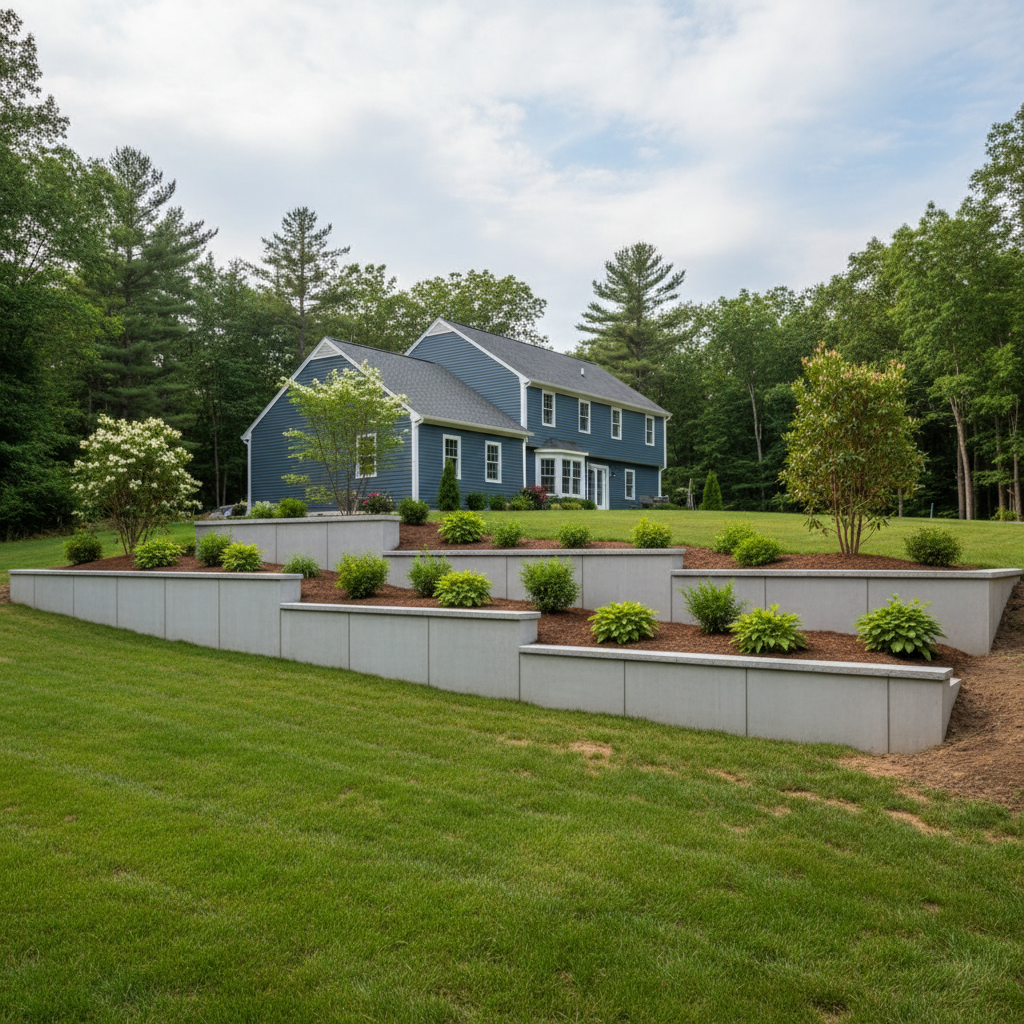
Alright, let's talk retaining walls. I've seen a lot of them go in around Manchester over the years, and frankly, I've seen a lot of them go in wrong. A good retaining wall is a real asset – it holds back soil, prevents erosion, and can even add some serious curb appeal. A bad one? That's a headache, a safety hazard, and a money pit. You don't want that.
Mistake #1: Thinking Any Old Wall Will Do
This is probably the biggest one. You've got a slope, you need to hold back some dirt, so you figure a wall is a wall, right? Wrong. The type of retaining wall you need depends on a bunch of factors: the height of the wall, the type of soil it's holding back, the drainage, and what's going to be on top of it. Is it just a garden bed, or is it supporting a driveway or a patio? These are all critical questions.
For instance, if you're dealing with a significant slope, especially in areas like the hills around Highland Park where you've got a lot of clay in the soil, you can't just stack some blocks and call it a day. That clay gets saturated, it expands, and it puts immense pressure on a wall. You need proper engineering, good drainage, and often, a reinforced concrete wall that's designed to handle that specific load. Trying to cut corners here is a recipe for a leaning, cracking, or even collapsing wall down the line. And trust me, fixing a collapsed retaining wall is way more expensive than building it right the first time.
Mistake #2: Skipping the Site Prep and Drainage
I can't stress this enough: drainage is king. Water is the enemy of any retaining wall. If you don't manage the water behind and around the wall, it's going to find a way to undermine it. I've seen walls built without proper gravel backfill, without weep holes, or without a French drain system behind them. What happens? Water builds up, pressure increases, and eventually, the wall fails. It's not a matter of if, but when.
Good site prep also means getting a solid, level foundation. You can't just plop a wall on uneven or poorly compacted soil. That wall needs a stable base to distribute its weight and the weight of the soil it's holding. If your contractor isn't talking about digging a proper trench, laying a compacted gravel base, and installing drainage, that's a huge red flag. They're cutting corners, and you'll pay for it later.
Mistake #3: Hiring the Cheapest Bid Without Asking Questions
Look, I get it. Everyone wants to save a buck. But when it comes to something as structural and important as a retaining wall, the cheapest bid often ends up being the most expensive. Why? Because that low price usually means they're skimping somewhere. Maybe they're using inferior materials, maybe they're rushing the job, or maybe they just don't have the experience to do it right.
Here's what you need to ask:
- Are they licensed and insured? Don't just take their word for it; ask for proof.
- Do they have experience specifically with retaining walls, especially concrete ones? Ask to see examples of their work.
- Will they pull the necessary permits? For anything over a certain height (often 3-4 feet, check with Manchester's building department), you'll need one. A good contractor handles this.
- What kind of warranty do they offer on their work?
- Can they explain their process for drainage and foundation? If they can't, or they brush it off, that's a problem.
At Coastal Concrete, we're not always the cheapest, but we're transparent about why. We use quality materials, we follow best practices, and we stand behind our work. You're investing in something that needs to last decades, not just a few years.
Mistake #4: Not Understanding the Materials
Concrete retaining walls aren't all the same. You've got poured concrete, which offers incredible strength and versatility, especially for taller walls or those needing to support heavy loads. Then you've got segmental block walls, which are often more aesthetic and can be easier to install for smaller projects. Each has its place.
Some homeowners get talked into a block wall when a poured concrete wall is really what's needed for the job. Or they choose a block system that isn't rated for the height or pressure it's going to endure. Make sure your contractor explains the pros and cons of the materials they're recommending for your specific project. Don't just assume what looks good in a catalog is suitable for your backyard's particular challenges.
Mistake #5: Ignoring Maintenance (or Lack Thereof)
While concrete retaining walls are generally low maintenance, they're not zero maintenance. You still need to keep an eye on them. Make sure drainage outlets aren't clogged. Keep vegetation from growing directly against the wall or roots from pushing into it. If you see any cracks developing, especially horizontal ones or signs of bulging, address them immediately. Don't wait until it's a full-blown structural issue.
The bottom line is this: a retaining wall is a serious construction project. It's not a DIY weekend job, and it's not something you want to skimp on. Do your homework, ask tough questions, and make sure you're hiring someone who knows what they're doing. Your property, and your wallet, will thank you for it.